A Simple Way To Play From Wet Rough

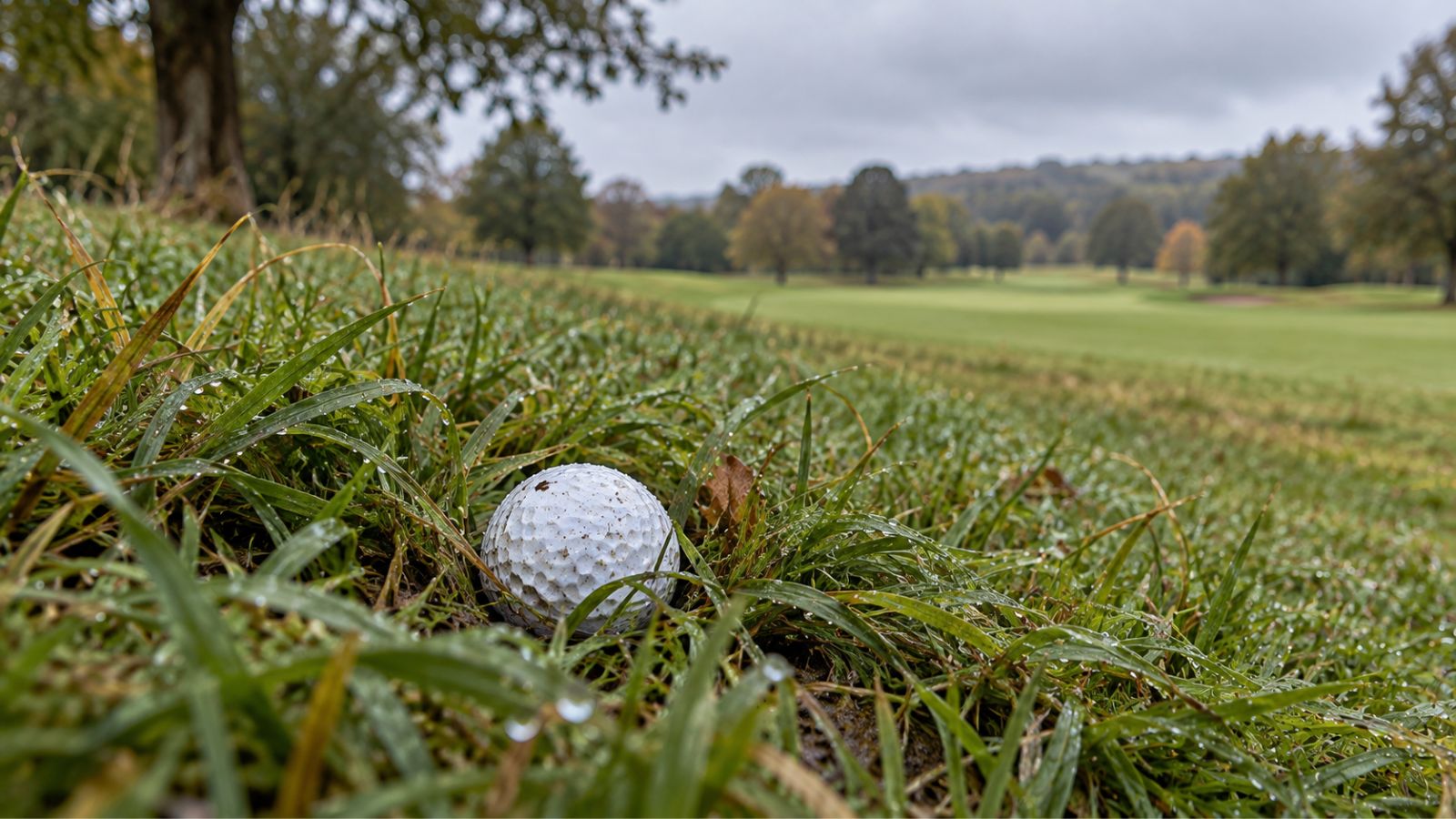
A ball in wet grass can look fairly harmless until you get close to it.
The yardage looks fine.
The green may be sitting there in front of you.
From a few yards away, the lie might not look too bad.
Then you get to the ball and realise the grass is heavier, the ball is sitting lower and the shot is not quite the one you thought you had.
That is usually where it catches you out.
The lie can change the whole picture
It is natural to look at the yardage first.
We all do it.
But when the ball is sitting down in wet grass, the yardage is not the only thing that matters.
Sometimes the ball is sitting well enough and there is not much to worry about.
Other times you can barely see the bottom of it.
Those are two very different shots, even if the distance is exactly the same.
And quite often, once you see the lie properly, the decision becomes fairly obvious.
Club choice can change as well
A club that looks right from the fairway may not feel quite so sensible once the ball is sitting down in heavy grass.
That can change what you reach for.
The question is not always:
What club normally goes this distance?
Sometimes it is:
What club gives me the best chance from this lie?
Quite often, the club you first thought of is no longer the obvious one.
The number on the card has not changed.
The shot has.
Wet grass has its own ideas
You can make what feels like a perfectly decent shot and still get a result you were not expecting.
The ball comes out shorter.
Or heavier.
Or simply a bit dead.
That is golf in soft conditions.
The grass and water get involved whether you invited them or not.
So expecting exactly the same result as you would from the fairway is asking a lot.
The flag might not be the best place to look
A tucked flag can suddenly look a lot less inviting from a poor lie.
There might be a bunker nearby.
Water short.
Or simply a much safer part of the green with more room around it.
That is where a wider target starts to make more sense.
Not because you are giving up on the hole.
Just because the lie has already added enough uncertainty.
There is no need to add more.
It is easy to ask too much
You can see the green.
You know you would normally reach it.
So it is very tempting to think nothing much has changed.
That is usually where the argument starts.
The ball is sitting in a poor lie, but in your head you are still playing the shot you would have had from the fairway.
Most of us have done that.
Usually more than once.
There is nothing wrong with admitting that the lie has taken a few options away.
A decent result may not look very exciting
From this sort of position, a useful shot might finish short of the green.
It might finish on the safer side.
It might simply get you onto better ground.
That can feel a little disappointing when you were hoping for more.
Five minutes later, it often looks like a perfectly decent result.
You tend to judge these shots better once the ball is out of there.
Some lies are just not worth arguing with
There are times when the ball is sitting down and the grass around it tells you everything you need to know.
No clever answer.
No special plan.
Just one of those moments where golf has handed you something unpleasant and you deal with it.
That probably becomes easier with experience.
Not because we suddenly become wonderfully sensible.
But because after enough years, you have seen what happens when you try to make a poor lie behave like a good one.
It normally wins.
Soft conditions can make the whole round feel different
One awkward lie is one thing.
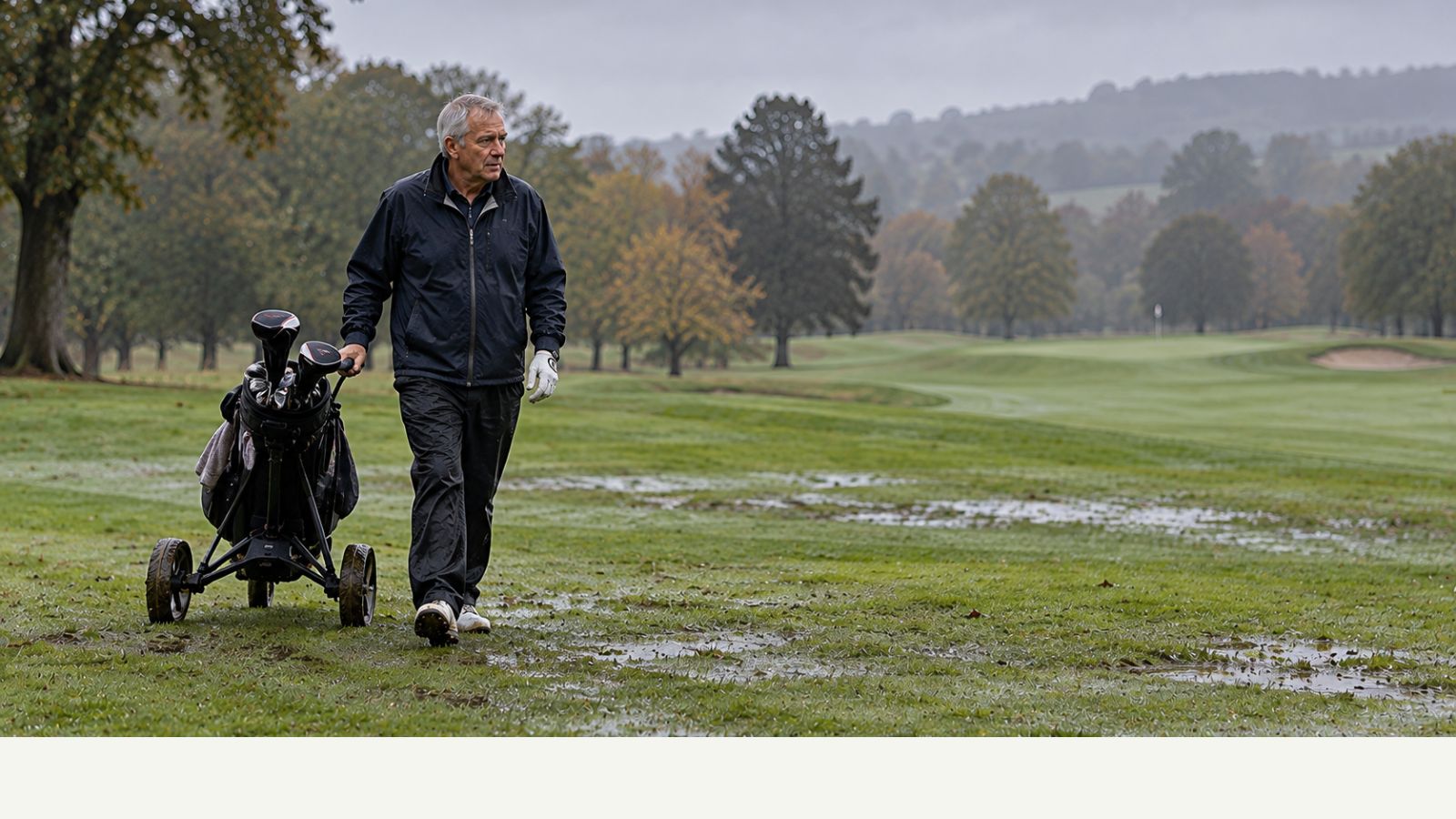
A whole course that is wet and heavy is another.
Balls stop quickly.
Rough feels thicker.
Walking takes a little more out of you.
And the round can start feeling harder without anything dramatic actually happening.
If that is the sort of day you are dealing with, Golf in the Rain: How to Make a Wet Round Easier looks at the wider picture.
A ball sitting down in wet grass is never going to be anyone's favourite shot.
But it does not have to become a big event either.
Sometimes the lie has had its say, and there is not much point arguing with it.
Take what the shot gives you and get on with the hole.
If the problem is less about the grass and more about recovering after a poor shot, The Next Shot After Finding Trouble picks up from there.