How To Finish Fresher Over 18 Holes
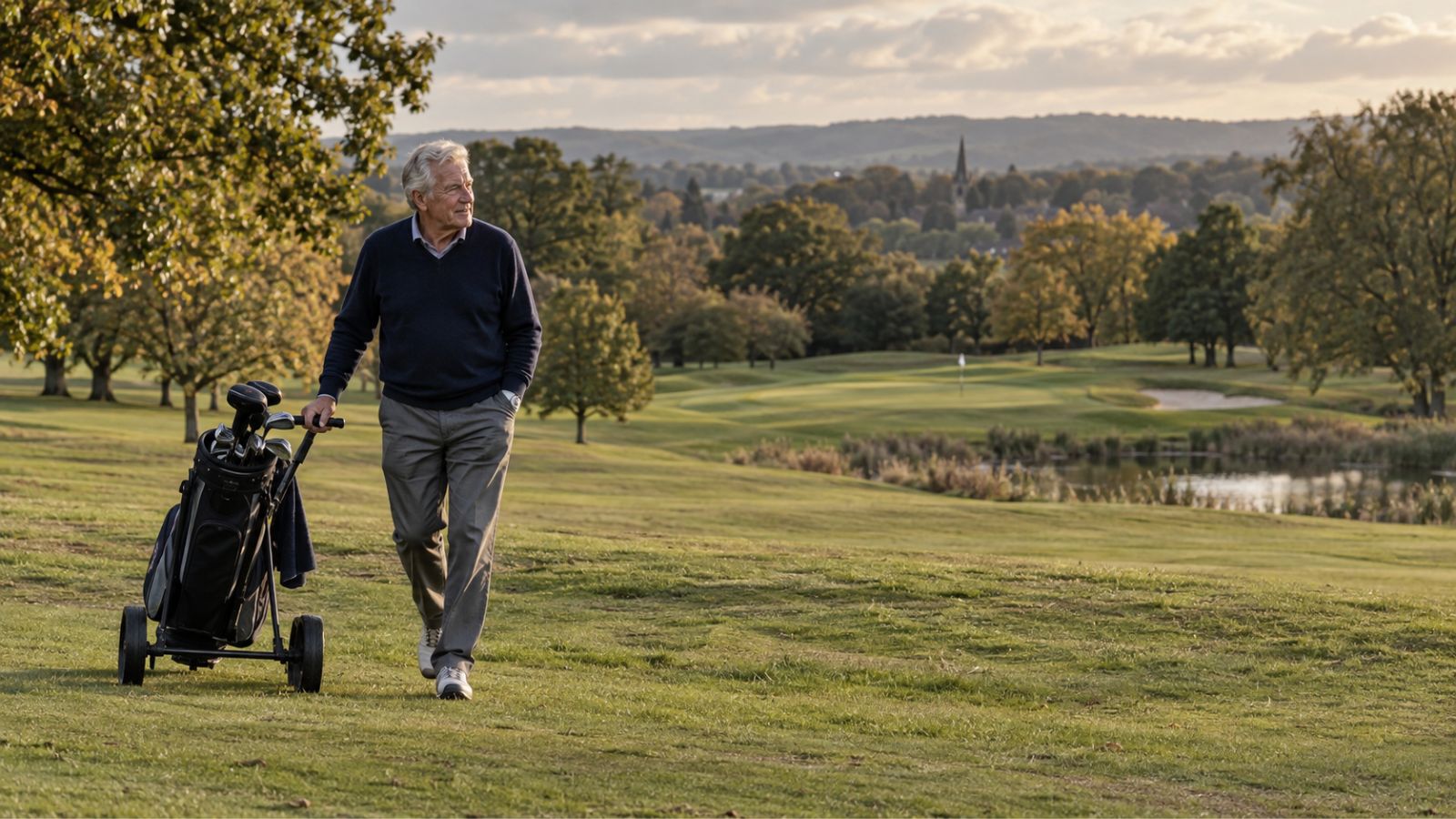
A lot of golfers do not lose the round with one bad hole.
They lose a little bit of it at a time.
By the 13th or 14th, the legs feel heavier.
The concentration slips.
Decisions get a little quicker.
And the small mistakes start creeping in.
Nothing dramatic has happened.
You are just more tired than you were two hours earlier.
That is often when the round starts getting harder than it needs to be.
The back nine asks more of you
Golf takes more out of you than people sometimes admit.
There is the walking, obviously.
But there is also the standing around, carrying or pushing, waiting, thinking and staying switched on for several hours.
By the later holes, most golfers are not suddenly playing terrible golf.
They are just working with a little less energy than they had at the start.
That matters.
A rushed start can catch up with you
Some of the back nine is shaped before the first tee shot is even hit.
If the morning has been rushed, you have sat in the car for ages, arrived stiff, forgotten a drink and are already feeling behind, the round starts with a bit more effort than it needed to.
You do not need a grand pre-round routine.
But giving yourself a few minutes before you head off can make the start feel less sudden.
And that can help later on as well.
If that is something you notice, A Simple Warm-Up By The Car Before Golf is about exactly that.
Rushing burns energy quietly
A lot of energy disappears without us noticing.
Walking too quickly between shots.
Getting tense after one bad hole.
Trying to repair the whole card by the 6th.
That sort of thing adds up.
Golf usually feels better when the day has some rhythm to it.
Not slow.
Just not constantly hurried.
The bag can wear you down
A heavy bag can make a long round feel even longer.
That is not exactly a revelation.
But plenty of us still carry things we have not used for months.
An old glove.
An extra layer.
Two bottles we forgot were in there.
A collection of bits and pieces that seemed important in April.
By the time it all adds up, the bag starts behaving like a small shed.
If you carry, less weight matters.
Even with a trolley, lifting and moving a heavy bag all day still takes something out of you.
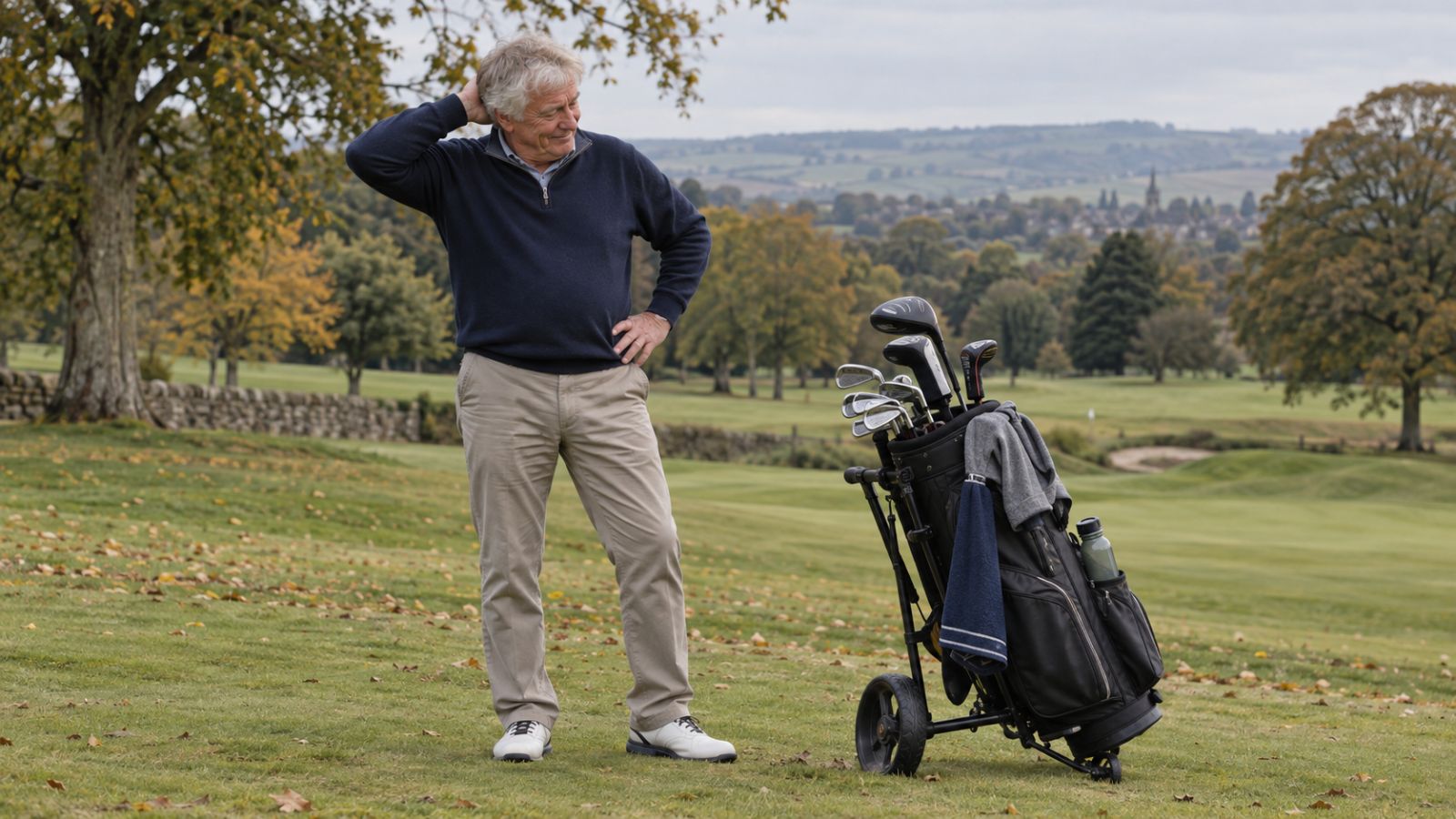
Food and water are easy to leave too late
This is not glamorous advice.
It is still worth saying.
A lot of golfers wait until they feel flat before they drink or eat anything.
By then, the later holes have often started feeling harder.
You do not need to turn the bag into a picnic.
A drink through the round and something small before the slump arrives can be enough.
Tension is tiring too
Not all tiredness comes from the legs.
Some of it comes from fighting the round.
Getting annoyed with every poor shot.
Replaying the last hole.
Walking to the next one still arguing with yourself.
That takes energy as well.
The golfers who seem to finish better are often not doing anything remarkable.
They are just wasting less effort on what has already happened.
Trouble makes the day longer
A ball in play usually makes the round flow more easily.
When you are searching in rough, climbing around banks, chopping out sideways or working your way back from behind trees, the round starts asking for more.
More walking.
More thinking.
More patience.
One or two holes like that is golf.
A whole day of it gets tiring.
That is one reason steadier golf can feel easier as well.
Sometimes the head goes first
Late in the round, it is not always the legs that go first.
Sometimes it is concentration.
You rush a club choice.
You stop giving a shot quite enough attention.
You switch off for something that deserved another few seconds.
That is tiredness too.
Finishing fresher is partly about having enough left mentally for the shot you are actually playing.

You do not need to feel fresh on the 18th
Nobody is expecting to walk off the last green feeling as though the round has barely started.
Eighteen holes should take something out of you.
The point is simply not to arrive there feeling as though you have spent energy on things that did not deserve it.
A little less rushing.
A little less weight.
A drink before you need one.
A bit less arguing with the round.
Those things are not dramatic.
But over four hours, they add up.
Finishing fresher is rarely about one big fix.
It is usually about making the day slightly easier from the start and wasting less along the way.