Best Golf Shoes For Older Golfers Who Walk
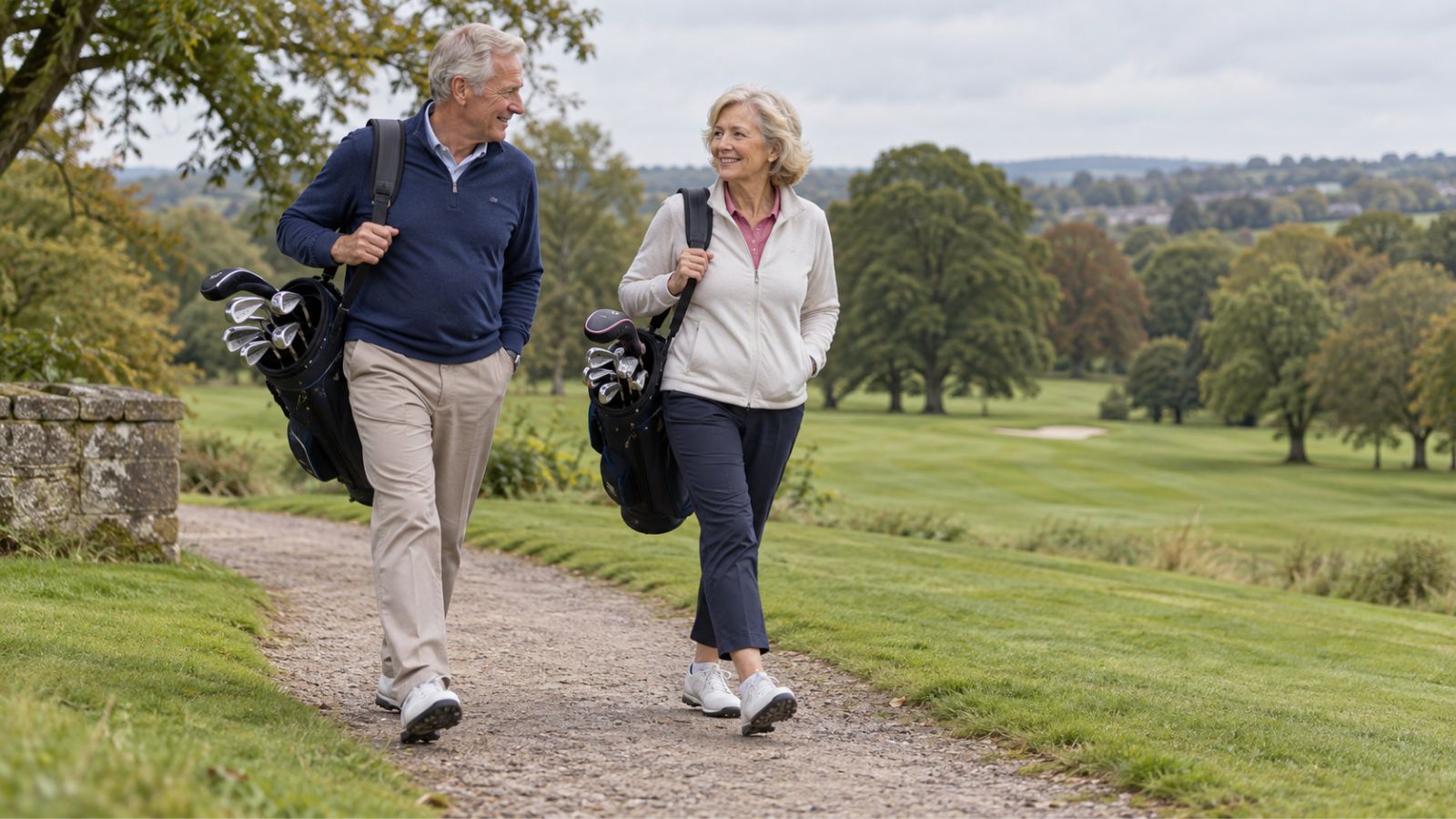
Walking the course is one of the best parts of golf.
But your shoes need to be helping rather than slowly wearing you down.
A pair can feel perfectly comfortable when you first put them on and very different four hours later.
That is the test I would use.
Not how they look in the shop.
Not whether they are the newest model.
How do they feel when you are walking up the eighteenth?
For older golfers who still enjoy walking most of their rounds, comfort, fit, grip and keeping your feet dry matter far more than they used to.
Before you start shopping
This guide is for golfers who still prefer walking but have noticed their feet feel the round more than they once did.
The right golf shoe will not improve your putting or find the middle of the fairway.
It can, however, make four hours on your feet much easier to live with.
That matters.
Affiliate Disclosure
Some links in this article are affiliate links. If you buy through them, I may earn a small commission at no extra cost to you. Thank you for supporting Every Round Golf.
If your current shoes are already feeling tired, tight or no longer keeping your feet dry, you can browse golf shoes at Affordable Golf here.
Start with comfort over a full round
Golf shoes do far more work than we tend to give them credit for.
They take you over paths, slopes, wet grass, firm summer ground and soft winter fairways.
By the back nine, a shoe that is slightly wrong starts making itself known.
A heel rubbing.
Toes feeling cramped.
Feet getting damp.
A sole that no longer feels secure on a slope.
None of these things ruins a round on its own.
Put a few of them together and the walk starts becoming harder work than it should be.
That is why I would judge a golf shoe by late-round comfort, not the first five minutes.
Fit is where many golfers go wrong
A lot of us buy shoes largely from habit.
Same size.
Same brand.
Job done.
But feet change.
A shoe that fitted perfectly ten years ago may no longer suit you in quite the same way.
Width is especially important.
Some golfers do not need a larger size at all. They need more room across the forefoot.
A shoe that feels slightly tight before the round is unlikely to improve after four hours of walking.
The same applies in the other direction. Too much movement inside the shoe can become irritating surprisingly quickly.
If your current shoes feel cramped, try a wider fit before simply going up a size.
If extra width is usually the problem, browse wider-fit golf shoes at Clickgolf.
Grip matters more when the ground turns awkward
Good grip is easy to forget about on a dry, flat fairway.
You notice it on wet grass, greasy slopes and softer ground.
That is where a decent sole earns its keep.
You want enough grip to feel secure without the shoe becoming heavy or awkward to walk in.
For anyone playing regularly through a British autumn and winter, this becomes more important.
Wet leaves, damp paths and soft turf are part of the deal.
The shoes need to cope with them.
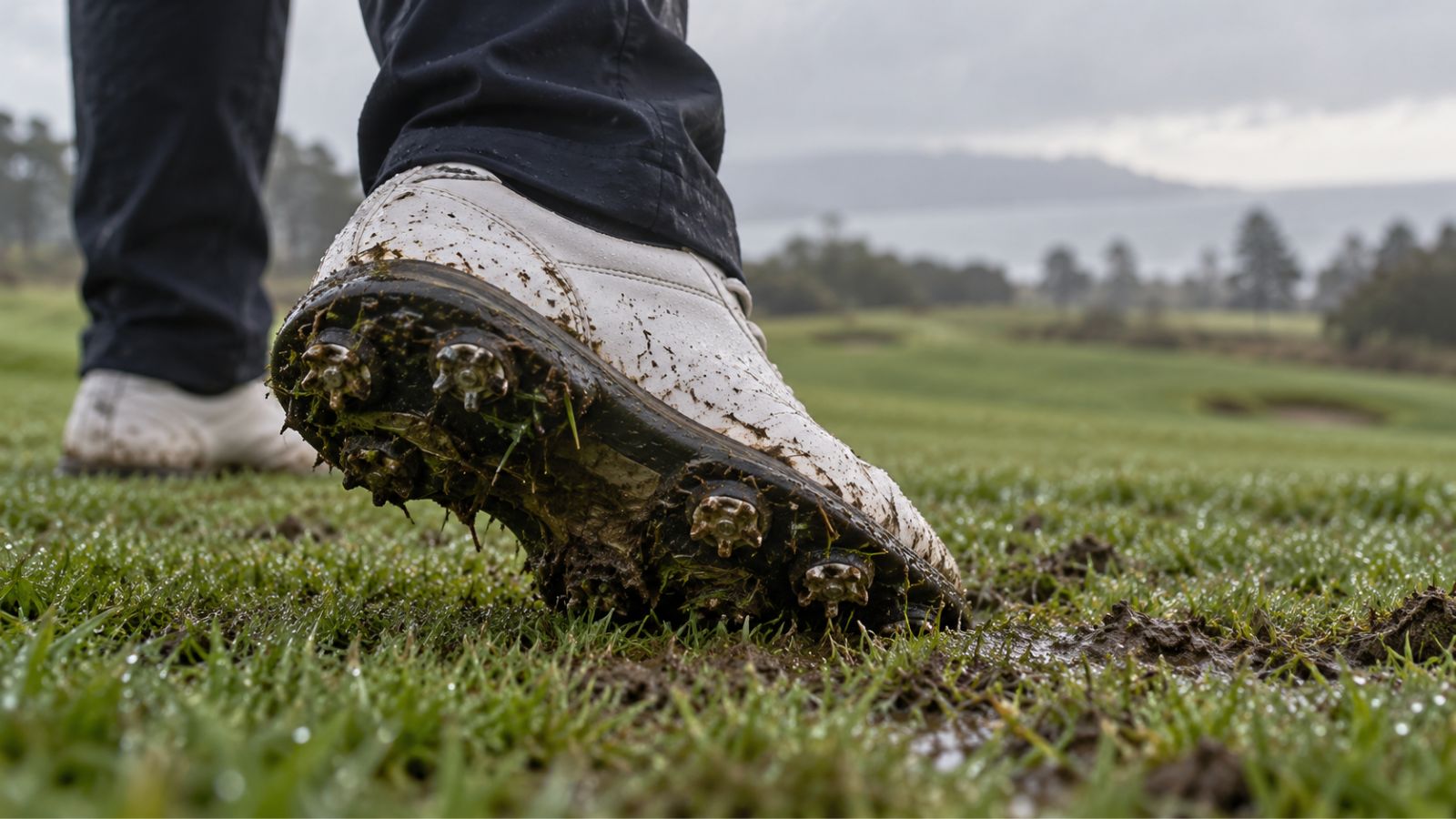
Waterproofing is not only for rainy days
You do not need a downpour to finish with wet feet.
Morning dew can do it.
So can rough that holds moisture long after the rain has stopped.
A course can look perfectly playable and still leave the outside of your shoes soaked by the turn.
If you play regularly in Britain, decent waterproofing is worth having.
Dry feet are one less irritation over a long round.
If your current shoes have started letting moisture through, that is probably a better reason to replace them than waiting until the soles are completely worn out.
Browse waterproof golf shoes at Affordable Golf.
If you play regularly through the colder months, you may also find Winter Golf Gear That Makes Cold Rounds Easier useful.
Spiked or spikeless?
There is no winner here.
They do slightly different jobs.
Spikeless
A good spikeless shoe can work very well for golfers who value:
- lighter weight
- walking comfort
- less fuss
- easy use before and after the round
Plenty now feel closer to a comfortable walking trainer than the stiff golf shoes many of us remember.
For spring, summer and reasonably firm ground, that can be ideal.
Browse spikeless golf shoes at Golf Gear Direct.
Spiked
Spiked shoes still make plenty of sense when:
- the ground is soft
- slopes are slippery
- winter golf forms a large part of your year
- you prefer a firmer feeling underfoot
If you play twelve months of the year, having a more secure winter pair can be useful even if you prefer spikeless shoes for most of the season.
Look at the sole before the upper
Golf shoes are usually photographed from the side.
That is not necessarily the most useful view.
Turn them over.
Look at the sole.
Ask yourself whether the tread looks suitable for the courses and conditions you normally play.
A smooth-looking sole may be perfectly adequate on firm summer turf but less convincing halfway down a wet bank in November.
This is also worth checking on your current shoes.
The uppers may still look perfectly respectable while the useful grip underneath has largely disappeared.
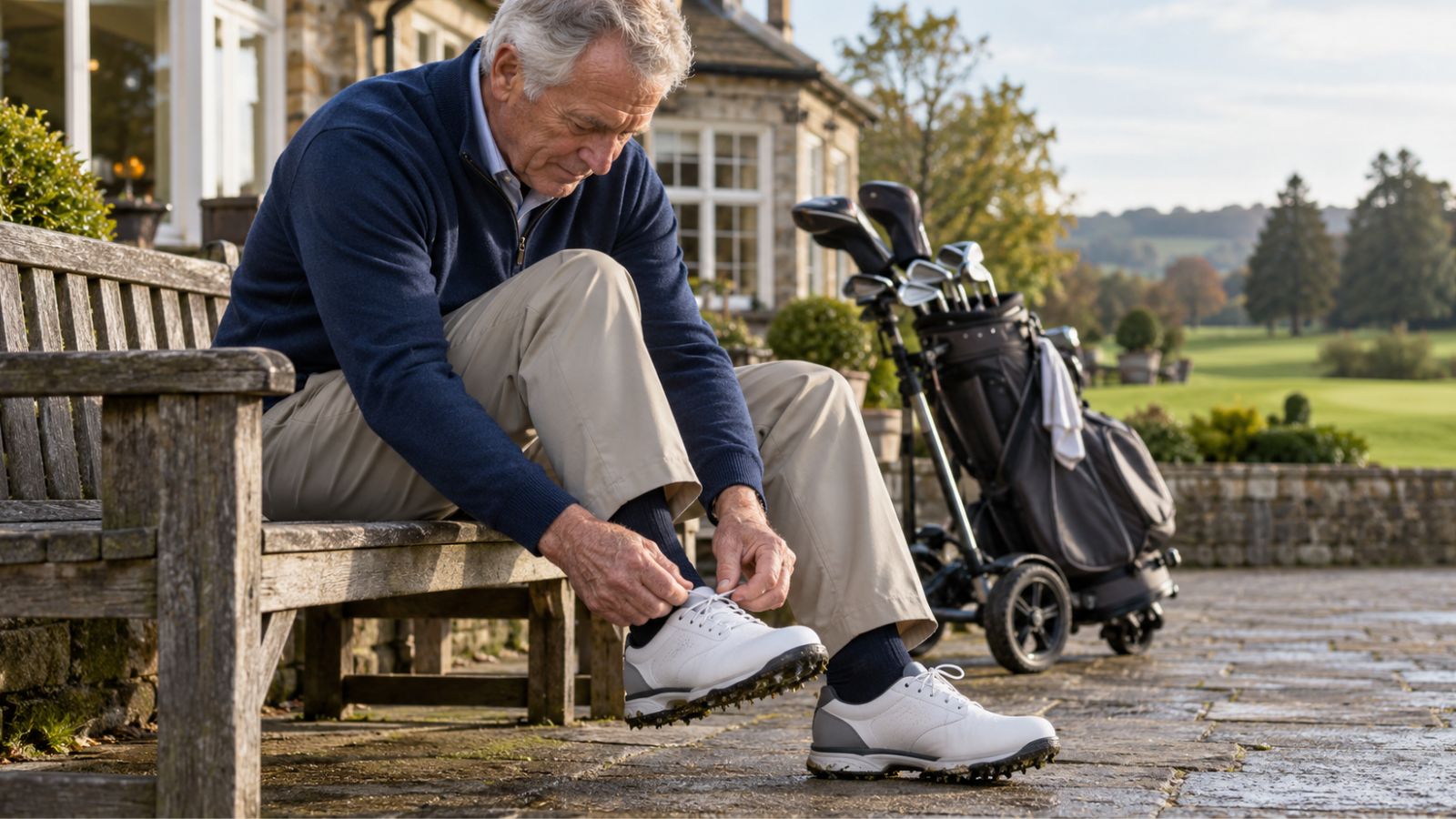
Do not ignore how easy they are to put on
This sounds like a small thing until you do it every week.
A shoe can be comfortable once it is on and still be unnecessarily awkward to get into.
If bending and pulling at tight footwear has become more irritating over the years, look for:
- a generous opening
- easy lacing
- a heel that does not collapse
- enough room to get the foot in comfortably
You do not need clever technology.
You need shoes that do not start annoying you before you have even reached the first tee.
What good value actually looks like
The most expensive shoe is not automatically the best one.
Neither is the cheapest pair automatically good value.
If a reasonably priced pair fits properly, stays dry, grips well and remains comfortable for eighteen holes, it is doing the job.
Paying more makes sense when the extra money buys something you will actually notice:
- better fit
- better waterproofing
- better grip
- lighter weight
- better durability
A cheaper pair left in the wardrobe because they hurt your feet is not a bargain.
If the walk itself is becoming more tiring, Best Lightweight Golf Bags for Older Golfers Who Walk may also help.
Three useful routes to narrow the choice
If there are too many options, start with the problem you are actually trying to solve.
Your feet get tired
Look first at cushioning, weight and walking comfort.
Your feet get wet
Prioritise waterproofing and a secure sole.
Your shoes feel cramped
Look at wider-fit options rather than assuming you simply need a larger size.
That will usually narrow the field faster than comparing twenty pairs based on brand names.
What I would look for before buying
If I were buying golf shoes mainly for walking, I would check them in this order:
- Fit
- Comfort
- Grip
- Waterproofing
- Weight and ease of use
Looks still matter. We all prefer shoes we actually like wearing.
They just come after the things your feet will notice for four hours.
And if carrying the bag is taking more out of the round than it used to, see Best Golf Trolleys for Older Golfers: Push or Electric?
A few questions golfers often ask
What should older golfers look for in a golf shoe?
Start with fit and comfort over a full round.
After that, look at grip, waterproofing and whether the shoe suits the type of ground you normally play on.
The shoe should feel secure without feeling heavy or restrictive.
Should older golfers always buy waterproof shoes?
Not always.
If most of your golf is played in dry summer conditions, waterproofing may be less important.
For golfers playing regularly in Britain through spring, autumn and winter, it is a useful feature to have.
Wet grass alone can be enough to soak a poor pair.
Are spikeless shoes good enough?
For a lot of golfers, yes.
They can be lighter and very comfortable to walk in.
If your course gets wet, soft or slippery through winter, a spiked shoe may give you more confidence underfoot.
How long should golf shoes last?
I would not put a fixed number on it.
Check the soles.
Check whether they still keep your feet dry.
Notice how they feel late in the round.
If the grip has gone or your feet are telling you the shoes are tired, they probably are.
Final thought
For older golfers who walk, golf shoes are not really about fashion.
They are about making four hours on your feet easier.
A pair that fits properly, grips well and stays comfortable late in the round is doing exactly what you need it to do.
That is where I would spend the money.
If you'd like a simple golf thought to take into the weekend, my free Friday email might be worth a look.
Every Friday I share one practical thought to help make your next round a little easier or more enjoyable.
See you out there,
Andrew