Late Summer Golf Gear: What to Check Before Autumn
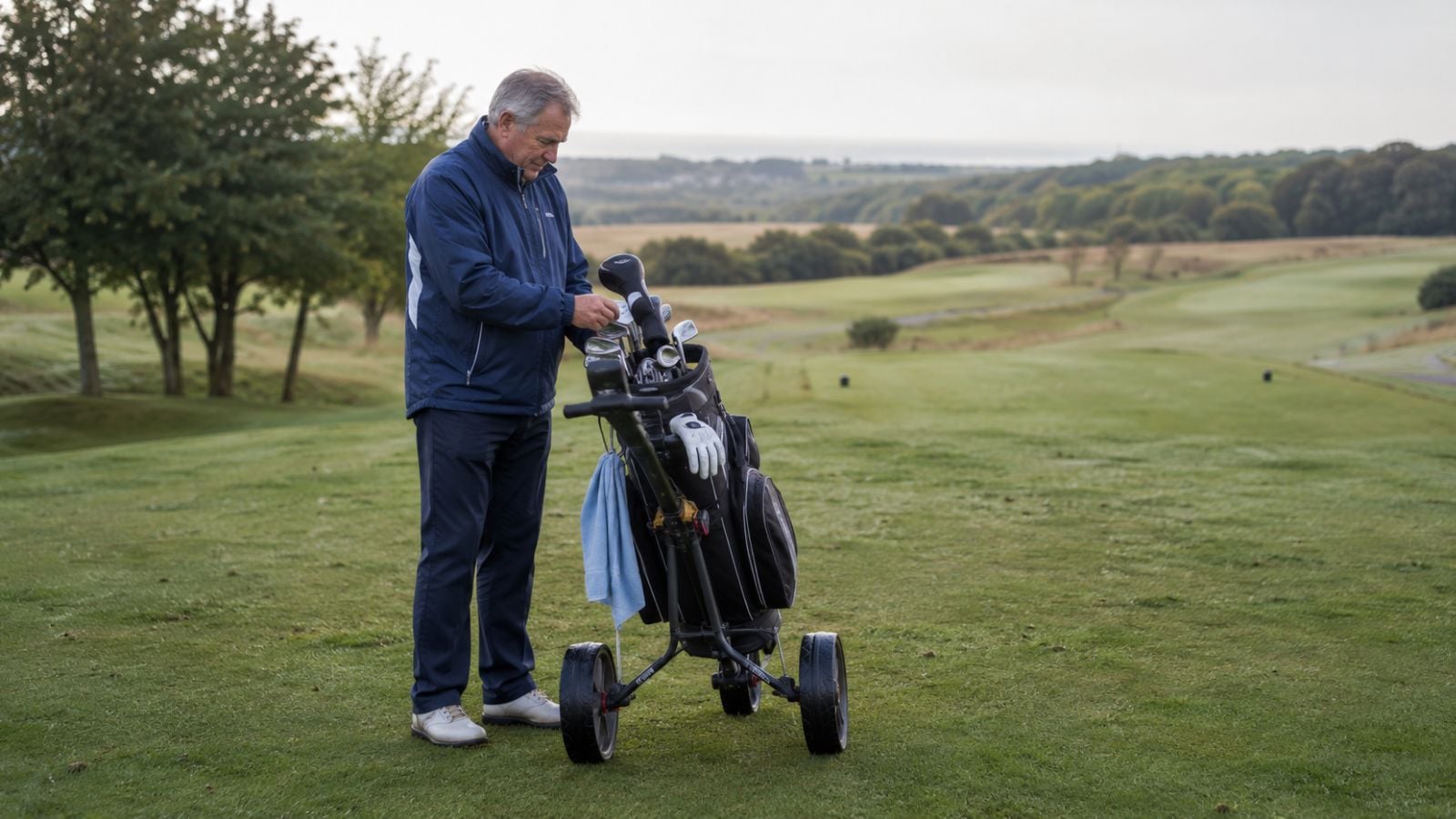
Late summer golf can be a bit sneaky.
The calendar still says summer, and you may still get a warm afternoon. But the course often starts giving you little clues that autumn is on the way.
Cooler mornings.
Damp grass.
A bit more breeze across the open holes.
A shower that was not quite in the forecast.
A glove that felt fine on the 1st, then started behaving like a damp tea towel by the 11th.
It is not winter golf.
Not yet.
But late summer is often the right time to check whether your gear still earns its place.
Not a full clear-out.
Not buying things because the season is changing.
Just a sensible look at what might help when the course starts to feel a little different.
Autumn golf rewards golfers who are ready, but not overpacked.
Start with your shoes
Shoes are easy to ignore until they become the problem.
In proper summer, a pair of golf shoes can feel fine. The ground is dry, the rough is not too wet, and the walk feels steady enough.
Then late summer arrives.
The morning grass holds more moisture. Slopes feel a little less secure. Feet feel colder than expected. A shoe that was comfortable in July may not feel quite as useful when the ground starts changing.
That does not mean you need new shoes straight away.
But it is worth checking three things.
Are they still keeping water out?
Do they still grip properly?
Are they still comfortable over 18 holes?
That last one matters more than people admit. A shoe can look perfectly decent by the back door, then quietly make the last six holes feel longer than they should.
Good golf shoes should not make themselves the centre of attention.
Best Golf Shoes For Older Golfers Who Walk
They should simply let you walk, stand, swing and finish without thinking about your feet all afternoon.
That is usually a sign they are doing their job.
Affiliate Disclosure
Some links in this article are affiliate links. If you buy through them, I may earn a small commission at no extra cost to you. Thank you for supporting Every Round Golf.
Worth a look: If your shoes are starting to let in water or feel less steady on damp ground, Affordable Golf is worth checking for a few sensible golf shoe options before autumn arrives.
Check the waterproof before you need it
A waterproof jacket has a strange life in a golf bag.
For months, it sits there doing very little.
Then one day you need it in a hurry, and it is either buried under three old scorecards, wrapped round a banana, or not in the bag at all.
Late summer is a good time to check it.
You probably do not need full winter armour yet.
But a light waterproof or shower jacket can be very handy when the weather changes halfway through a round.
The key thing is not just whether you own one.
It is whether you can actually get to it.
If the jacket is at the bottom of the bag, underneath things you never use, it is not really ready. It is just present.
There is a difference.
A good late-summer waterproof should be easy to reach, light enough to carry without fuss, and comfortable enough to swing in.
You do not need to dress for December in August.
But you also do not want to be standing on the 8th tee in a sudden shower, wondering why your waterproof is still in the car.
Most golfers only make that mistake once.
Some of us make it annually, just to keep tradition alive.
For light waterproof jackets and layers, Golf Gear Direct is a useful place to compare options that are easy to carry without making the bag feel heavier than it needs to.
If you are beginning to think beyond late summer, you may also find
Gloves start to matter again
In dry summer weather, a glove can be a fairly simple thing.
It either feels alright or it does not.
But once the air gets cooler and the grips get damp, gloves start to matter more.
A glove that is slightly worn may be fine on a warm day. In damp conditions, it can feel less secure.
That is when small things become irritating.
The club feels a bit loose.
You start squeezing harder without noticing.
The swing feels less comfortable than it should.
You do not need a drawer full of gloves in the bag. But having one dry spare is rarely a bad idea when the season begins to turn.
It does not have to be fancy.
It just needs to be dry, easy to find, and not the old glove you put away last October because it was “probably still alright”.
That phrase has caused a lot of disappointment in golf bags.
If you are checking gloves before the wetter mornings arrive,
Scottsdale Golf is worth a look for all-weather or rain glove options.
A towel should earn its place
Some golfers carry a towel that looks as though it has been through three winters, two bunkers and possibly a small gardening job.
Others have a towel clipped neatly to the bag that never seems to touch anything.
The best towel is somewhere in between.
When the grass is damp, grips pick up moisture. Balls pick up more dirt. Clubs come back with a little more on them.
A towel starts earning its place again.
The main thing is access.
If the towel is buried in a pocket, it will not get used.
If it is clipped where you can reach it, you are much more likely to wipe the grip, clean the club face, and keep things feeling simple.
You do not need three towels for a normal late-summer round.
But one decent towel, in the right place, can make a surprising difference.
As with most golf gear, the question is not:
Do I own one?
It is:
Do I actually use it?
Do not pack for winter too early
This is where a lot of golfers go wrong.
The first cool morning arrives and the bag suddenly fills up as if someone is preparing for an expedition.
Extra layers.
Thick waterproofs.
Winter gloves.
Spare hats.
A second towel.
A third towel, because towels do seem to breed in golf bags.
Before long, the bag is heavier than it was in January.
Late summer is not the time to carry the whole winter setup.
It is the time to prepare lightly.
A thin layer.
A shower jacket.
A spare glove.
A towel that does the job.
Shoes that can handle damp ground.
That may be enough.
The aim is not to be ready for every possible weather event.
The aim is to be ready for the likely ones without making the walk harder than it needs to be.
Keep what helps.
Golf Bag Clutter After 60: What to Carry and What to Leave Out
Leave out what makes the round harder.
Check your bag or trolley
Before autumn arrives, give your bag or trolley a quick look.
Nothing dramatic.
No need to lay everything out on the garage floor like a kit inspection.
Just check the basics.
Are the zips working?
Are the useful pockets easy to reach?
Is the towel in a sensible place?
Are you still carrying summer items you no longer need?
If you use a trolley, check the wheels, straps and battery if it is electric.
A trolley problem has a habit of appearing at the worst possible moment. Usually just far enough from the clubhouse to make the walk back feel longer than it should.
If the bag itself is starting to feel heavier or more awkward than it should, you may find
Best Lightweight Golf Bags for Older Golfers Who Walk useful.
If it has simply become cluttered during summer, now is a good time to reset it.
Not strip it down to nothing.
Just take out the things that have stopped helping.
Old gloves.
Empty water bottles.
Receipts.
A sun cream bottle that has leaked into a pocket and made a mess you would rather not find in October.
We have all had one of those pockets.
Best not to leave it until the weather gets colder.
Think about your tee time
A useful late-summer habit is to think about your tee time, not just the forecast.
The weather app may say 18 degrees and dry.
But that might be for lunchtime.
If you are teeing off at 7:40, the course can feel very different.
Cooler air.
Damp grass.
Less roll.
A little more moisture around the greens.
That does not mean you need to carry more.
It means you need to carry the right few things.
For an early tee time, shoes, towel and a light layer may matter more than they did a month ago.
For a later tee time, you may still be closer to summer golf.
This is where experience helps. Most older golfers have seen enough golf weather to know the forecast only tells part of the story.
The course tells the rest.
You may not need to buy anything
Sometimes the best late-summer gear check ends with:
Actually, what I have is fine. I just need to organise it better.
That is a perfectly good result.
But if one part of the setup is making the round harder, whether that is shoes, waterproofs, gloves, towel or bag organisation, it is worth sorting before autumn properly arrives.
The useful thing is not buying more.
The useful thing is knowing which part of the round needs help.
A quick late-summer check
Before your next round, ask yourself:
- Are my shoes still keeping my feet dry and steady?
- Is my waterproof easy to reach?
- Do I have one dry spare glove?
- Is my towel where I can actually use it?
- Am I still carrying things that only made sense in hotter weather?
- Does my bag or trolley need a quick check before autumn?
That is enough.
Late summer does not need a full gear rebuild.
It just needs a little attention before the round starts feeling different.
One thing to remember
The weather does not change all at once.
It usually gives you a few clues first.
Cooler mornings.
Damp grass.
A bit more breeze.
A glove that does not feel quite right.
Shoes that suddenly matter more than they did in July.
Notice those clues early, and you can keep the round comfortable without filling the bag with things you do not need.
The right gear earns its place by making the round easier.
The rest is just weight.
Enjoy every round.